
A unique device is not equivalent to a unique person. If a person uses multiple devices, each device used by the individual will be counted as a Unique Devices with Ended Plays.
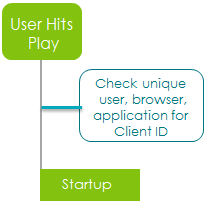
The first time a device connects to Conviva, Conviva assigns a Conviva client ID. For app-based players, the Conviva client Id is unique for each installed app, and it typically persists until the app is re-installed. For browser-based players, the Conviva client Id is unique for each browser instance and host, and it persists until the browser is re-installed or the cache is cleared.

This metric shows the number of Unique Devices with Ended Plays aggregated across the intervals of the selected time period. Unique Devices with Ended Plays is an 'Ended' type metric and is counted in the interval in which the device has an Ended Plays. If a device has a single viewing session that starts in one time period and ends in a later time period, that device contributes to the count of Unique Devices.
Unique Devices with Ended Plays is available in the following formats:
- Unique Devices with Ended Plays summary: the total number of unique devices with ended plays that ended during the selected time period
- Unique Devices with Ended Plays time series: a time series for the selected time period, where each point is the number of unique devices with ended plays during that specific interval.
Unique Devices with Ended Plays is available only in hourly, daily, monthly intervals. In the MetricLens, Unique Devices with Ended Plays is available only in 5 minute intervals.
In data exports, Total is the number of unique devices with ended plays across all dimension values, which is often less than the sum of all individual dimension values. For some dimensions, such as DMA, city, and asset, the same device can contribute to multiple dimension values, such as viewers using the same device in different cities or DMAs, causing a single device to contribute to the totals of several dimension values. However, this device is counted only once in the Total.
Note: Due to high cardinality of devices in most publisher networks, unique device metrics (Unique Devices w/ Ended Plays, Unique Devices w/ Attempts, and Minute Per Unique Device) use an approximation algorithm for efficient calculation (de-duplication) of device counts. As a result, unique device metric values may show slight differences when comparing values in Summary metrics, time series, and dimension tables, for example Unique Devices with Ended Plays showing a higher value than Ended Plays, or Unique Devices with Ended Plays dimension total showing slightly more than the sum of the listed dimension entity totals.
Related Support
|
Metric Details |
Description |
|---|---|
| Dashboards and Metric Presentation |
|
| Dimensions | Use MetricLens dimensions to filter this metric by metadata segments for enhanced audience engagement analysis. For example, limiting data to a specific asset and player to understand the size of your audience for a specific event. |
| Diagnostics |
No. |
| Manual Alert Support |
No. |
| AI Alert Support | No. For information about AI alert notification based on Impacted Unique Devices, see AI Alerts. |
| Metric Adjustment |
None. |
For more metric definitions, see the Metric Dictionary.